Where Your Campfire Actually Comes From: Following the Log Trail Through the Countryside

Photo by Photo by Peter Schulz on Unsplash on Unsplash
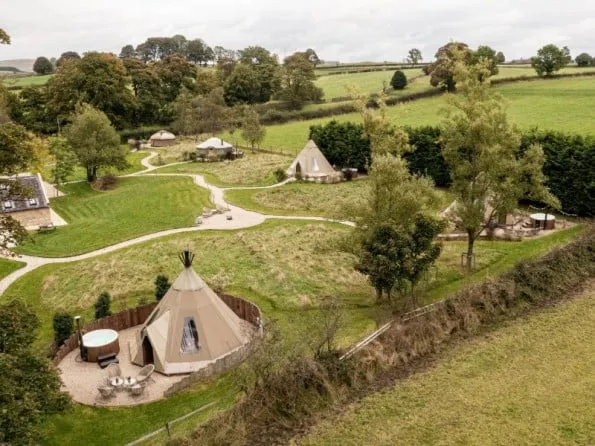
There's a moment, usually around nine o'clock on a tipi weekend, when the fire catches properly. The kindling goes, the logs settle into that satisfying orange glow, and someone says the thing everyone says: "I could sit here all night."
What nobody at the fireside ever asks is: where did these logs actually come from?
We did. And the answer turned out to be far more interesting — and far more local — than we expected.
The Fallen Ash in the Next Field
Start with the wood itself. A surprising amount of the firewood burned at small UK campsites never goes near a depot or a wholesale pallet. It comes from a farmer's back forty, felled by storm damage or routine hedgerow management, then sold by the tractor-load to whoever's cutting and splitting locally.
One forester we spoke to in the Welsh borders described his winter entirely in fields: "Ash blow-overs from the gales in '22, a beech that had to come out of a pasture, a larch plantation thinned for the landlord. None of it travelled more than six miles before it reached my splitter."
That's the hidden economy of the campfire. No container ships. No vast distribution centres. Just small woodlands being managed, deadwood being cleared, and a chain of one-man businesses passing it along.
The Micro-Business You've Never Heard Of
Between the tree and your fire pit sits a whole layer of rural enterprise that never makes the news. Split-log operations are the definition of a micro-business: a processor, a dry store, a transit van, and a phone that rings when campsites and holiday lets need restocking.
Many are part-time livelihoods — a farmer's second income, a semi-retired forester's winter work, a young couple diversifying a smallholding. The margins are thin and the work is cold, wet and heavy. But the demand is steady, because every glamping site, shepherd's hut and tipi field in the country needs a reliable stack of seasoned logs from roughly March to October.
When you buy a net of logs at a site, you're not really buying firewood. You're buying a slice of someone's winter income, kept in the county instead of exported to it.
Why Seasoned Beats Cheap
Here's where travellers come in. The single most useful thing you can know about firewood is the word seasoned — wood that's been dried properly, usually for eighteen months to two years, down to a moisture content below 20%.
Seasoned wood burns hotter, cleaner and with far less smoke. Unseasoned or "green" wood hisses, sulks and coats the flue in tar. And since 2021, the sale of wet wood in small quantities has actually been restricted in England under the air quality rules, so reputable suppliers should be selling certified, dried logs anyway.
A few things worth doing on your next escape:
- Buy on site or from the local supplier the site recommends. That's the money going straight back into the local chain.
- Skip the supermarket multi-pack you threw in the boot — it's often imported, over-packaged and travelled further than you did.
- Burn what's provided, not what you forage. Deadwood is habitat; removing it disrupts the very countryside you came to enjoy.
- Never burn treated timber, painted fences or pallet wood on an open fire. It smells foul and it's genuinely bad for you.
The Slow Travel Argument
We'll admit the bias: this is exactly the kind of thing we mean by slow travel. The campfire is one of the last pleasures in British life with a genuinely traceable supply chain. You can stand in a field, look at the nearest woodland, and make a reasonable guess about where your evening's warmth began.
Compare that with a disposable barbecue shipped in from three continents, or a delivery van idling up a farm track with your takeaway. The firewood economy — forester, splitter, farmer, campsite, fire pit — is short, mostly sustainable, and quietly keeping skilled rural work alive through the months when tourism income dries up.
So next time the logs catch and the conversation drops into that happy fireside murmur, spare a thought for the journey. Storm-felled ash, a splitter in a barn, a van ride down single-track lanes, and finally the crackle you're listening to.
Not bad for a £6 net of firewood. And genuinely, properly local — the way most of our favourite things still should be.