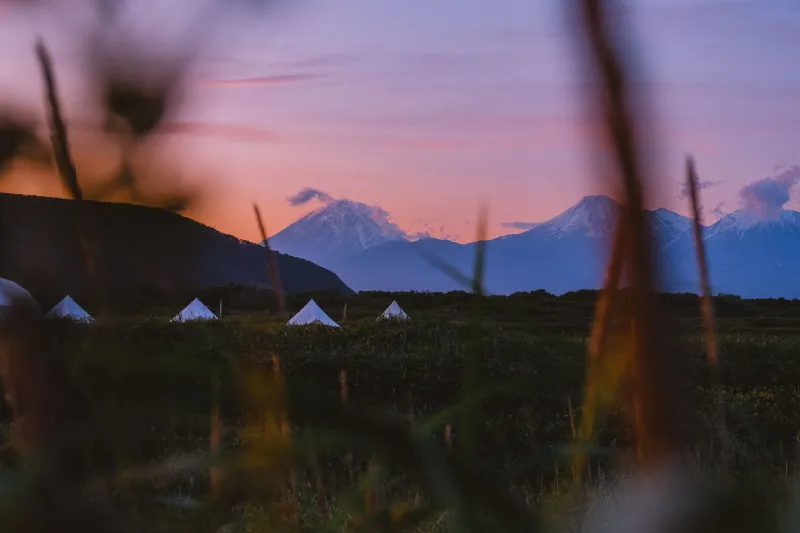
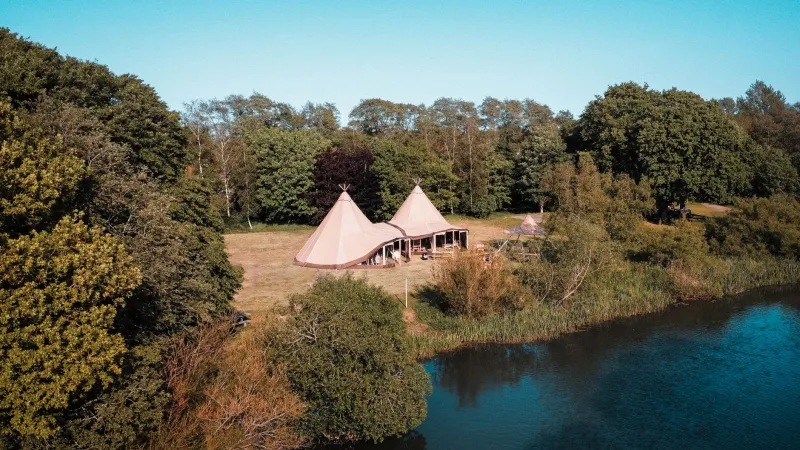
Nothing Diarised, Everything Gained: The Art of the Empty Tipi Saturday
We are a nation of weekend planners. A couple of nights away can turn into a logistics exercise: a spreadsheet of timings, a saved list of cafés, a walk downloaded, a table booked, a backup table booked. None of that is wrong, exactly. It is just that a tipi field tends to reward the opposite instinct. The best Saturdays under canvas are often the ones with nothing in the diary at all.
That is not an argument for winging the whole trip. You still need to get there, eat something, and stay warm. But there is a real difference between planning the journey and planning the stay. One gets you to the field. The other can quietly fill the field with obligations before you have even unzipped the door.
The itinerary trap
It starts innocently enough. You book a tipi for a weekend, then someone suggests a market town nearby, and suddenly Saturday has a schedule. Breakfast by nine, market by ten, walk at midday, late lunch at two, back before dark. It looks sensible on paper. In practice, it leaves no room for the things that make a tipi weekend feel different from a hotel break: the extra hour by the stove, the unplanned stop at a farm gate, the host saying, 'If you head up the lane before sunset, there is a view most people miss.'
A tipi is not a theme park with canvas. It does not need to be maximised. Its pleasures are small and slow, and they tend to arrive in the gaps. If you fill every gap, you do not get more weekend. You just get a busier one.
Book the getting there, bin the being there
So plan the boring bits properly. Know your route, check the train times or the roadworks, and aim to arrive before dark if you are visiting in the colder months. Pack for the forecast and then pack one more layer than you think you need. Sort out Friday supper if you are arriving late, and make sure you know how to work the stove before you are hungry and tired.
Then stop. Leave Saturday alone.
A useful compromise is the 'maybe list' rather than the timetable. Jot down three or four loose possibilities and no times: a pub that looks decent, a footpath from the site, a farm shop for bacon, a nearby town for a rainy hour. Keep the list in your bag and forget about it. If the day bends towards one of them, fine. If not, the list has done its job by existing quietly in the background.
Let the weather write the day
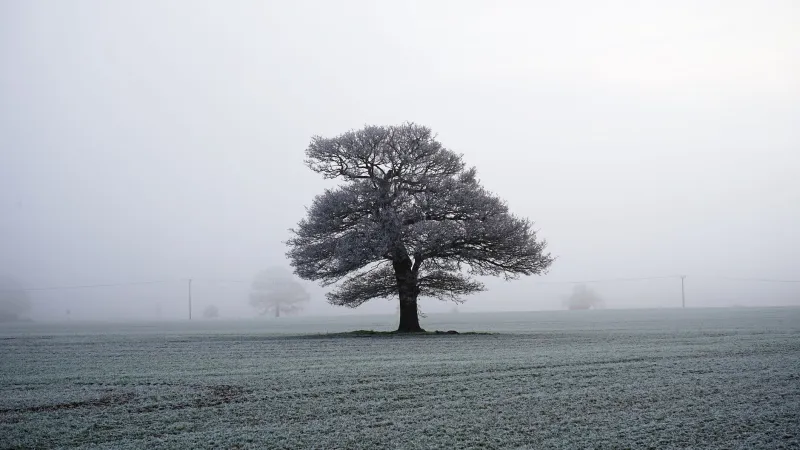
British weather is often treated as the enemy of a good weekend. In a tipi, it is better than that: it is a collaborator. A dry spell becomes an invitation for a walk. A heavy shower becomes an excuse to put the kettle on the stove, deal a hand of cards, and listen to the rain on the canvas. Wind sends you to a sheltered lane or a valley walk. Frost gives you a reason to be up early with a mug of something hot, watching your own breath in the air.
This is where a blank Saturday earns its keep. You cannot weather-proof a rigid itinerary, but you can bend a free day around a shower. Check the forecast in the morning, not the night before, and treat it as a hint rather than an instruction. The Met Office can tell you roughly what the sky is thinking; it cannot tell you that the lane behind the campsite will be misty and gorgeous at four o'clock.
The slow morning is the main event
At home, a slow morning can feel like wasted time. At a tipi, it is the point. You wake when the light comes through the canvas, not when an alarm tells you to. The kettle takes longer than an electric one, and that is fine. Breakfast becomes a small production: find the matches, coax the stove, butter the bread, sit back down. Somebody spots a bird. Somebody else says nothing at all.
Do not rush this bit to get to a car park. The slow morning is not a prelude to the weekend; it is the weekend. It is also the reason you came: to sleep wild, wake wonder, and remember that a day does not have to be full to be worthwhile.
Talk to the person who knows the field
One of the best things about a tipi stay is that you are usually not dealing with a reception desk. You are dealing with someone who knows the site, the lane, the weather patterns, and the pub that does a good Sunday roast without turning it into a performance. A casual chat with your host can be worth more than an hour of searching on your phone.
Ask what they would do with a free afternoon. Ask where the best sunset is, which footpath gets muddy, and whether the farm shop is worth the detour. You do not need to turn the conversation into a guided tour request. Just be curious. Hosts tend to share the good stuff when they are not being treated as a concierge service.
A small kit for doing very little
Doing nothing still goes better with the right bits and pieces. Keep a day bag half-packed so a spontaneous walk does not involve a hunt for missing gloves. Boots by the door, waterproofs on top, a flask, a torch, some cash for an honesty box, and a paper map or downloaded route if the signal is patchy. Add a book, a pack of cards, and something to cook over the fire. The aim is low friction, not high activity.
It also helps to leave the phone in the tipi for an hour or two. Not as a dramatic digital detox, just as a small experiment. A blank day is easier to notice when you are not scrolling through other people's plans.
The Sunday you did not ruin
A blank Saturday tends to produce a calmer Sunday. There is no backlog of bookings to squeeze in before checkout. You pack up slowly, sweep out the tipi, and drive home without the feeling that you have spent a weekend commuting between activities. The diary stays empty. The memory does not.
So book the tipi. Plan the train or the drive. Pack the layers. Then leave Saturday alone. Let the weather decide, let the host point you up the lane, and let the day be as uneventful as it wants to be. More often than not, that is the weekend you will actually remember.