After the Last Log: A Dusk-to-Dawn Wildlife Watch from Your Tipi
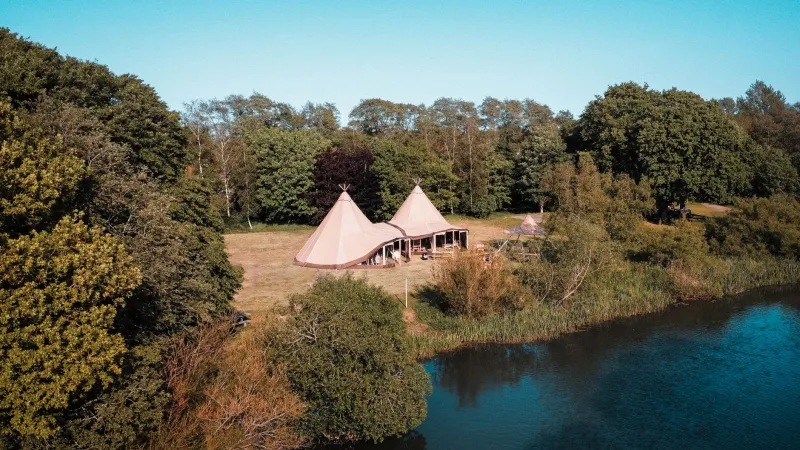
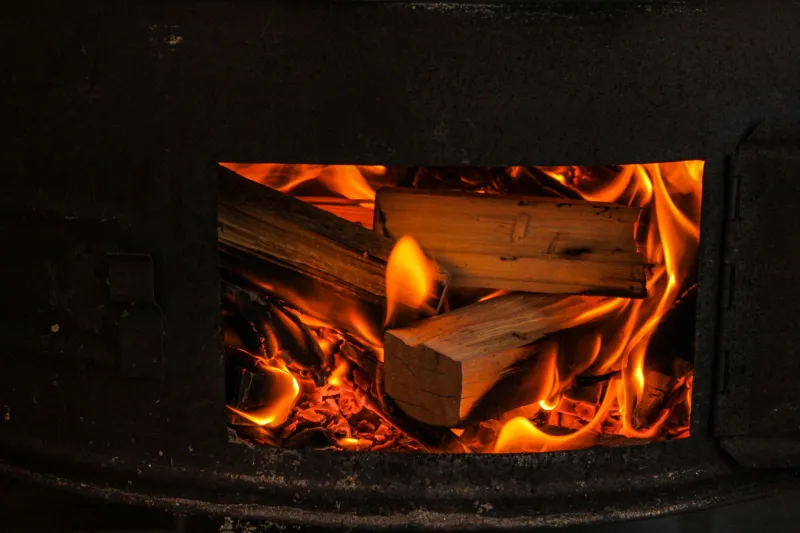
The fire has collapsed into a red eye and the last log is more ash than timber. You might think the field has gone quiet. It hasn’t. It has changed shift. Somewhere beyond the guy ropes, the night crew is clocking on: a pipistrelle stitching the hedge line, a tawny owl warming up its question, a fox taking the long way round the mown path. The tipi is not just a place to sleep through all this. It is, if you treat it right, one of the best wildlife hides in Britain — canvas walls, a zip for a door, and a front-row seat for a shift most of us never notice.
The first twenty minutes: look up, then look sideways
Dusk is not a single event. It arrives in layers. The first bats usually appear while there is still colour in the sky, often a good twenty minutes after sunset. Common pipistrelles are the ones you are most likely to see: small, fast, flicking around the edges of trees and hedges like scraps of dark paper. Soprano pipistrelles tend to prefer water and woodland edges; brown long-eared bats are slower,more fluttery, and often spotted near old buildings or mature trees.
You do not need to identify them to enjoy them. The trick is to stop scanning the whole field and pick a line — a hedge, a fence, the gap between two oaks — and watch that. Bats use edges to navigate and feed. Give yourself an edge to watch and the field stops feeling empty.
Listen for the gaps
A tipi field at night is not silent, but it is full of gaps. That is where the information lives. A tawny owl’s hoo… hoo-hoo is less a sound than a punctuation mark. A barn owl might drift past without a whisper, a pale shape over rough grass. Foxes are more often heard than seen: a sharp bark, a scream that sounds far too dramatic for a dog-sized animal, the rustle of something confident moving through bracken.
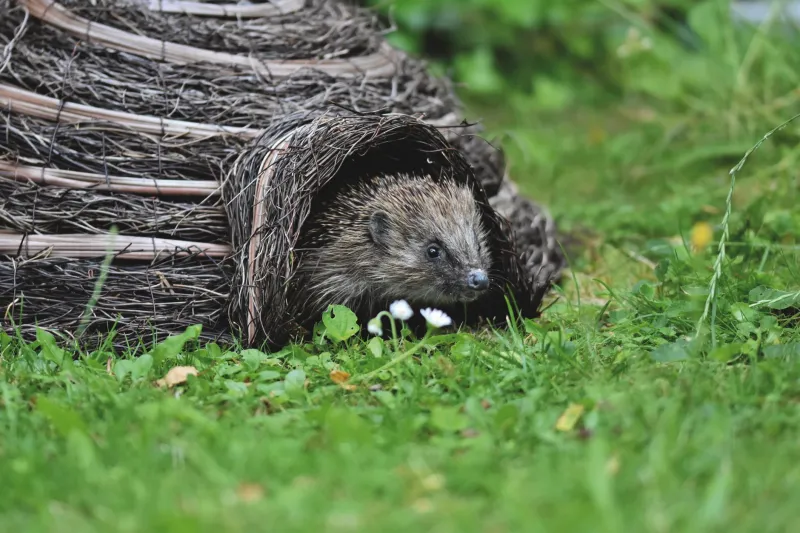
Try this: sit outside for five minutes and do nothing but listen. No phone, no torch, no chat. You will hear the field settle. Then you will hear the small stuff — a rustle under the hedge, a dry leaf turned over, a beetle crossing gravel. That is usually when the hedgehog makes its entrance, busy and oblivious, snuffling along the bottom of a boundary like a small determined carpet.
Red light, quiet feet: how to watch without taking over
The easiest way to ruin a night watch is to turn it into a searchlight parade. White torches flatten the dark, dazzle nocturnal eyes and make every creature feel like the headline act at a festival. Use a red torch instead, and use it sparingly. A red filter is kinder on night vision — yours and theirs. Sweep low, pause, then switch it off. Most wildlife will carry on if you are still, quiet and predictable. Very little will carry on if you are waving a beam around and whispering loudly about how amazing it all is.
Keep your distance from hedges, trees and water. Do not feed anything. Do not call animals in. The pleasure here is in watching a field go about its business, not in making it perform. A tipi already puts you close to the action; you do not need to close the last few metres.
The small contributors
Moths deserve a better reputation. A warm evening in late spring or summer can bring a surprising amount of traffic to a lit tipi window — buff-tips, hawk-moths, brimstones — and they in turn bring bats. If you want to watch bats, watch moths. If you want to watch moths, keep exterior lighting to a minimum and let your eyes adjust.
Hedgehogs are the field’s night-shift comedians: prickly, busy, surprisingly loud in dry leaves. Foxes are the opportunists, often using the same routes night after night. Badgers, where they are present, tend to be more secretive and should be watched from a distance, never followed. The rule is simple: you are a guest in their shift, not the supervisor.
Why the tipi makes a good hide — and a bad stage
A tipi works as a hide because it is already part of the landscape: canvas, wood, a low glow, a zip you can open quietly. It is a bad stage if you turn it into one. Keep voices low after dark. Close the zip gently. If you are playing music, keep it inside and keep it soft. Light spill is the biggest offender — a bright tipi can turn a whole hedge line into a stage set and pull moths and bats out of their natural routes.
Sit just inside the doorway with the canvas open, or on a log a few metres out. Give your eyes fifteen minutes to adjust. You will be amazed how much more you see when you stop trying to see everything.
A simple dusk-to-dawn plan
You do not need a schedule, but a loose rhythm helps. At sunset, walk the boundary quietly and note where the hedges, trees and water are. At dusk, sit still and watch one edge. In full dark, switch to listening more than looking, with short red-torch checks. Near dawn, the shift changes again: blackbirds, robins and the first pale light. Then sleep, or make tea, or both.
The point is not to tick off species. It is to notice that the field has a second life, and that your tipi puts you right beside it. Sleep wild, wake wonder — and somewhere in between, let the night shift get on with it.