Embers and Confidence: Learning to Read a Tipi Stove Like a Local
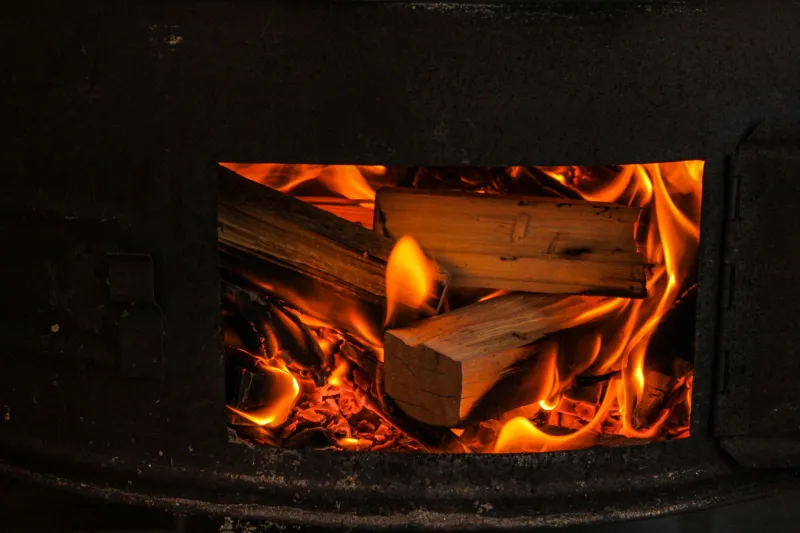
The first hour in a tipi follows a familiar script. You arrive, you dump your bag, you admire the canvas overhead — and then your eyes drift to the little cast-iron stove in the corner, sitting there with the quiet menace of an exam you haven't revised for.
Nobody hands you a manual at check-in. Which is a shame, because keeping a tipi warm through an October night in the Yorkshire Dales is a skill, and like all skills it comes with a learning curve. The good news? The curve is short, and the view from the top is lovely.
Start Smaller Than You Think
The mistake every first-timer makes is ambition. You gather a heap of logs the size of a labrador, stack them hopefully in the stove, apply a match, and watch nothing happen.
Fire is a hierarchy. You don't start with logs; you start with the smallest, driest, most flammable material you can find — kindling no thicker than a pencil, a firelighter or a twist of newspaper underneath, and patience. Light it low, let it catch properly, then add slightly bigger pieces. Only when the stove is properly ticking over do the proper logs go anywhere near it.
Think of it as a ladder, not a leap. Rungs, not heroics.
Know Your Wood
Not all logs are equal, and this is where a little knowledge pays for itself by 2am.
Ash is the people-pleaser — it burns steadily even when only partly seasoned, hence the old rhyme about ash being fit for a queen. Oak is the marathon runner: slow, dense, and long-burning, but it wants to be properly dry first, which usually means two years of seasoning. Birch catches quickly and burns bright, though it's a sprinter rather than a stayer. Pine and other softwoods are fine for getting things going but spit and burn fast — treat them as kindling's big brother rather than the main event.
The golden rule, whichever species you're burning: seasoned wood only. If a log feels heavy for its size or the bark squishes, it's wet, and wet wood produces smoke, sulk, and about a tenth of the heat. Most good tipi sites will supply dry logs — buy theirs. They've chosen it for a reason.
The Airflow Trick Nobody Tells You
Every stove has vents, usually a sliding dial beneath the door and sometimes a damper on the flue. These are the difference between a fire that roars and one that sulks.
Here's the rhythm: open wide to build, close down to cruise. When you're getting the fire going, give it all the air it wants. Once you've got a good bed of glowing embers and flames licking happily, ease the vents back to about a quarter. The fire slows, the logs last three times longer, and the stove settles into a gentle, even warmth rather than a furnace you have to keep feeding.
A tipi heats up fast — canvas is honest that way. You're not trying to make it tropical. You're aiming for the kind of warmth that means you can sit in a T-shirt with a mug of tea while the wind does its worst outside.
Banking the Embers: The Last Skill
Before you turn in, there's one final job, and it's the one that separates the confident from the cold.
Banking means setting the fire up to survive the night without attention. Roughly an hour before bed, let the flames die down. Rake the embers into a tight mound at the centre of the stove, add one or two dense logs — oak if you have it — and close the vents almost completely. Done well, you'll wake to enough residual heat that relighting takes two minutes rather than twenty.
And a safety word, briefly: never leave a stove blazing when you sleep, keep the flue clear, and crack a window vent if the site suggests it. Canvas and common sense go together.
The Confidence Curve
Here's what actually happens over a weekend. Night one, you're anxious, checking the fire every fifteen minutes, adding logs like a nervous parent. Night two, something clicks. You stop fussing. You learn the stove's rhythm — how it likes to be fed, when it wants air, when it wants to be left alone.
By Sunday morning you're relighting it one-handed with a mug of coffee in the other, wondering why you ever found it intimidating.
That's the quiet gift of the tipi stove. In a world of thermostats and apps, here's a warmth you have to understand — earned with kindling, patience, and a bit of trial and error. It's slow travel in miniature: a small, learnable skill that makes the whole weekend feel like yours.
Sleep wild, wake wonder — but first, light it low and let it catch.